Dun dun dun. Dun da-dun. Dun da-dun.
Dun dun dun. Dun da-dun. Dun da-dun.
Dun dun dun. Dun da-dun-dun-dun. Dun Dun.
Dun da-dun-dun-dun. Dun dun.
Dun da-dun. Dun da-dun.
Ah, a galaxy far far away. I’ve enjoyed the films so much in my life. I love the universe. I’ve watched every film and show, animated and live. And because today is Star Wars Day, we celebrate with an analysis that nobody asked for.
When did May the 4th become famous?
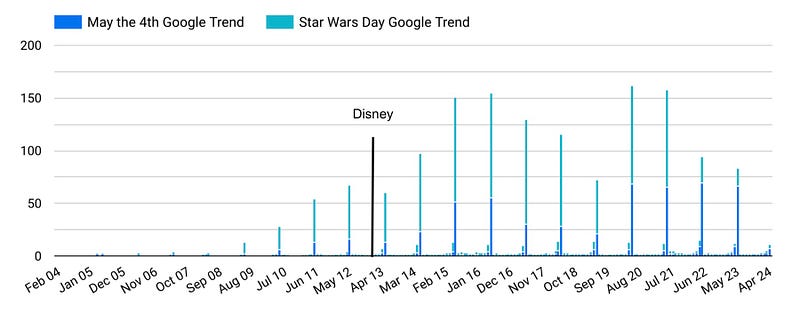
My dad and older siblings loved Star Wars too. But I don’t remember celebrating May the 4th as a kid. The first reference in pop culture was when Margaret Thatcher was elected UK Prime Minister in 1979. Google Trends only shows a history from 2004 and clearly, the popularity has grown since. It’s notable that the holiday (as a google search trend) started to grow prior to the Disney acquisition. Perhaps the growing popularity in 2011 led to a serious interest by Disney in 2012. It’s also interesting that search interest peaked during the pandemic in 2020–2021, when we had nothing else better to do. But has since gone down. This data goes until late April 2024.
How were the box office results?
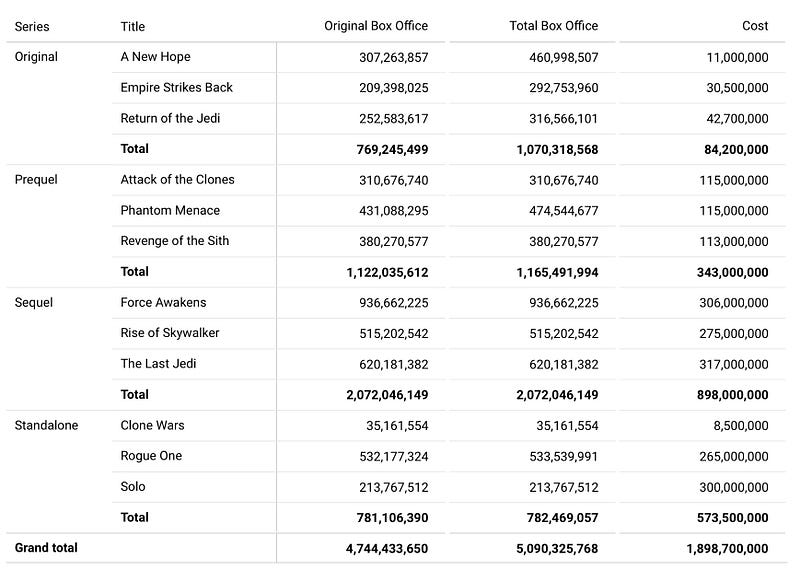
Not surprisingly, the originals did much better than the prequels or the sequels from a profitability perspective. But even gross box office, the originals almost have made as much as the prequels have. There are a few other interesting bits of information here.
First, if you notice carefully, the first movie in each series had the highest profit margins, hands down. Here’s a full chart of all three series:

Even if you exclude the blockbuster that is A New Hope, it’s still an incredible difference.
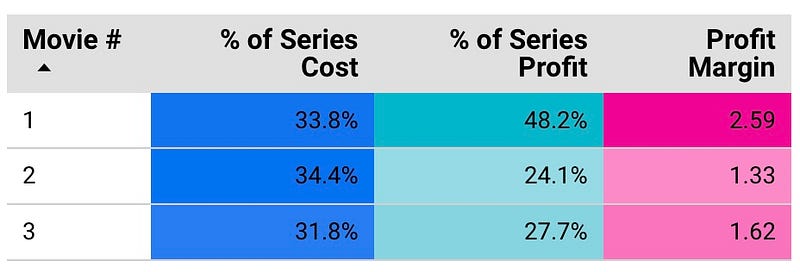
I don’t have a visual, but the original series was 7.7x more profitable than the prequels and 4.7x more profitable than the sequels! It’s also interesting that on a percentage basis, the animated movie Clone Wars made more than any movie besides the Prequels. And, the first movie’s original release was 3.1x more profitable than any other movie’s entire box office profit. Truly a remarkable feat.
What about Disney?
It is notable on our previous charts that the box office results for Disney-owned movies (Sequel + Rogue One and Solo) is less than what Disney paid for Lucafilm in 2012.
Disney paid $4.05 billion for the rights to Lucasfilm and Star Wars. And the total box office Disney has received comes out to $2.8b (before costs).
But Disney still makes money right?
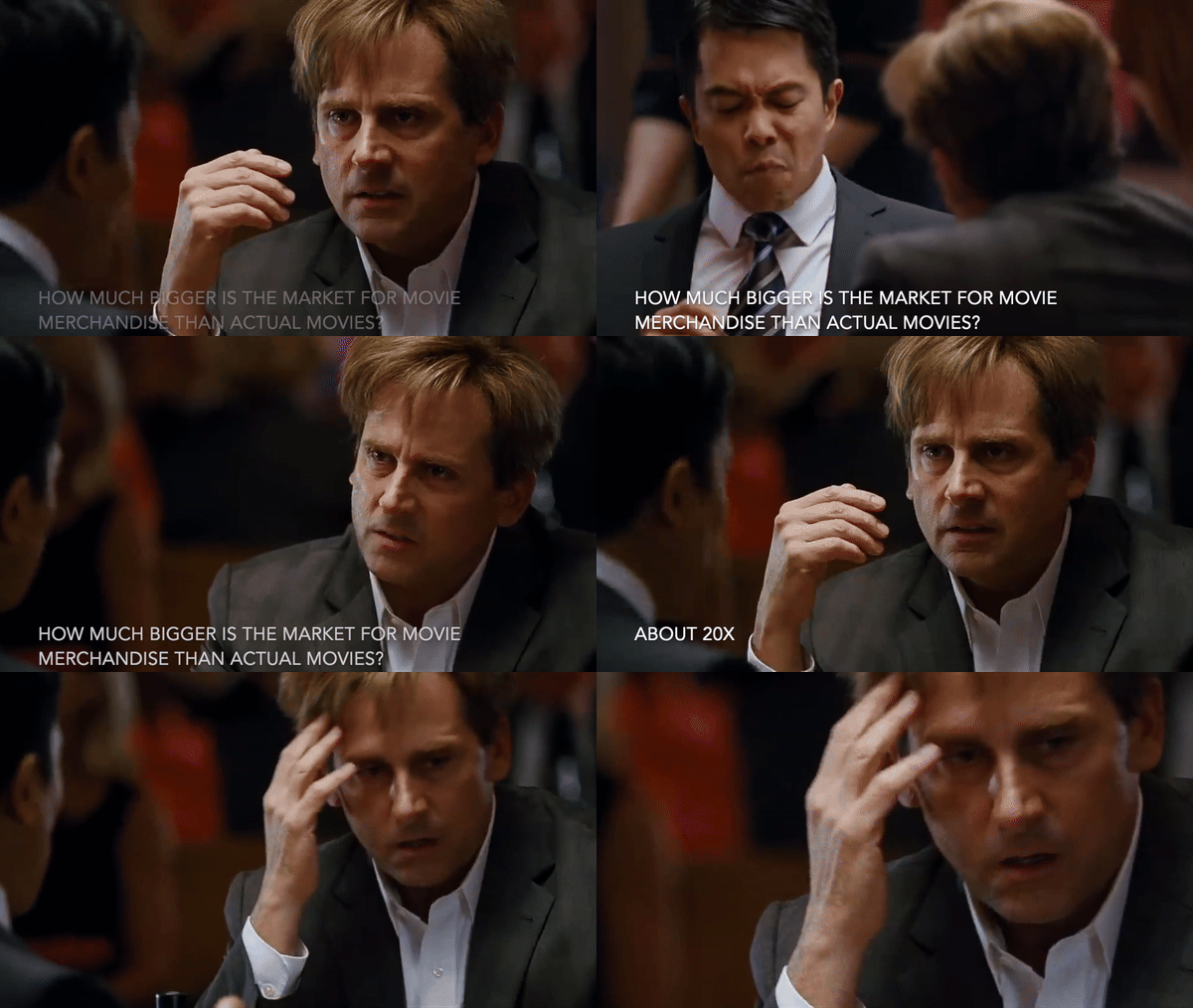
Don’t worry though. Disney makes billions from Star Wars IP through merchandise and licensing, which Disney is incredible at. There are conflicting reports, but Disney makes anywhere from $2-$7 billion every single year.
The actual delta is not actually 20x, but it’s close. In some respects, the movies and streaming shows are simply a cost of doing business to keep merchandise flowing.
Business Lessons Learned
Know what you’re good at. Disney is great at merchandise and (in a lot of people’s opinions), not great at creating Star Wars movies. Focus on the good, get better everywhere else.
You’re going to fail. In the entire Star Wars universe, there are many examples of failed entertainment (Christmas anyone?) Don’t let your failures detract from what is working.
— — — — — — — — — — — — — — — — — — — — — — — — — — — — — — — — — — — —
ANAF is a fun insightful series brought to you by WIPP Data, a Data Agency bringing you custom data solutions for any business.
Learn More
Email Us
Book an Appointment
 WIPP Data Blog
Leave a comment