Introduction
Within the landscape of supply chain management, procurement analytics has become more critical than ever. For business leaders, particularly Vice Presidents of Supply Chain, the challenges of reducing costs, decreasing risk, and developing talent have taken center stage. In this concise guide, we’ll delve into Procurement Analytics 101, providing you with a straightforward overview of this essential aspect of data-driven decision-making.
Let’s dive in and explore the core concepts, practical tools, and real-world applications that can empower you to make informed decisions and drive success in your supply chain endeavors.
Goals of Procurement Analytics
Imagine having a compass that guides you through the labyrinth of supply chain intricacies, enabling you to steer your organization toward optimal performance and sustainable growth. That compass is procurement analytics. At its core, procurement analytics is about harnessing the power of data to make more informed and strategic decisions regarding your entire supply chain.
These three goals are the three fundamental objectives for Procurement Analytics. the top of so many people’s minds.
Cost Reduction
There are multiple types of procurement reports that enable cost reductions. Spend Reports allow Supply Chain Leaders to scrutinize spending patterns. Price Variance Reports are used to identify discrepancies in pricing. Supplier Scorecards enable Supply Chain teams to negotiate better contracts and optimize supplier relationships, all with the goal of minimizing expenses without compromising quality or service.
Risk Mitigation
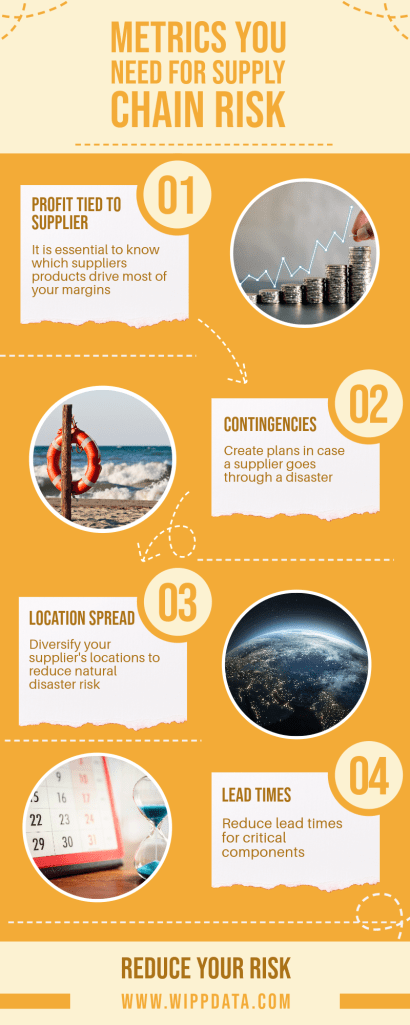
Procurement isn’t just about cost; it’s also about managing risk. In today’s globalized markets, supply chains are vulnerable to various disruptions, from geopolitical tensions to natural disasters. There are many different ways to measure risk. Create a strategy that aligns with your company objectives and use analytics to drive improvement.
Talent Development
A skilled and motivated workforce is the backbone of any successful organization. And the last thing your team members want to do is manually calculate every single analysis they need by pulling data from 10 systems. By automating much of your Procurement analytics, you give your team hours back every day to spend more time executing your supply chain strategy.
Key Components of Procurement Analytics
Effective procurement analytics relies on two primary data sources.
- Spend Data: This encompasses all information related to your organization’s expenditures on goods and services, including purchase orders, material receipts, invoices, expense reports, and contract data.
- Supplier Data: Supplier data offers insights into your relationships with external vendors, including supplier performance metrics, financial health, and supplier profiles.
With these two sources of data, a Supply Chain leader can start driving the KPI’s and metrics that are most vital for their organization:
- Cost Savings: Measure the money saved through strategic procurement decisions
- Supplier Performance: On-time delivery rates, product quality, and responsiveness
- Inventory Turnover: Evaluate inventory management efficiency
- Demand Forecasting Accuracy: Gauge the alignment of forecasts with actual demand
These metrics guide decision-making and help achieve cost efficiency, risk reduction, and talent development.
Tools and Tech
A robust Enterprise Resource Planning (ERP) system serves as the cornerstone of effective procurement analytics. This integrates various aspects of your operations, including finance, inventory, and procurement. Within procurement analytics, an ERP system provides a centralized platform for collecting, storing, and analyzing necessary data.
Complementing your ERP system, data visualization and predictive analytics software play pivotal roles in simplifying and enhancing procurement analytics. Data visualization tools transform complex data into digestible insights, facilitating better decision-making.
The Big 2 for Visualization are Tableau and Power BI. Other options include Looker, Qlik, or AWS Quicksight
Predictive Analytics Software is still in its infancy and doesn’t have a strong #1 option yet, but a couple options include Vendr or Jaggaer
How to Start
There are a few ways to get started on your Procurement Analytics Journey.
Existing Resources
First, you could use existing internal resources to be a little better. If you have someone on your staff that is an “Excel Wizard”, allocate some of their time to expand their horizons on what’s possible. This is great if your budget is stretched thin as it is and your team has time to tackle additional projects.
Hire an Internal Team
A second option is to hire a technical and business oriented leader to build a team of Data Experts. If you move forward with this plan, be prepared to hire Data Engineers, Data Scientists, and Data Analysts. This is a great option if your company is ready for a significant investment in a team of people.
Outside Service
The last option is to use consulting agencies such as WIPP Data or Sourcing IQ. These firms specialize in Supply Chain Management and have deep experience in Supply Chain Data. There are many other consulting agencies available. If you go down this path, just make sure that whoever you hire has experience in complex Supply Chain functions.
Conclusion
In the realm of supply chain management, procurement analytics stands as an essential strategic tool. With a robust ERP system as your foundation and additional tools, you can make informed decisions that drive efficiency, cost savings, and sustainable growth in your organization. Embrace these tools, leverage your data, and witness the transformation of your procurement efforts.
 WIPP Data Blog
Leave a comment